


Speakers
| Conference Speakers |
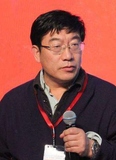 | Professor Anhui Liang Shandong University of Science and Technology, China Speech Title: Biological Optical AI on the Retinas of Human and Vertebrates, Biological Optical Fiber Couplers and Biological Transistors Abstract: We first found this inverted retina structure of human and vertebrates is biological optical AI, which is consisted of four layers of optical fiber couplers and saturable absorbers. We study the strong fiber coupling effects among seven identical human foveal cones. We first found there are biological transistors and biological diodes on retinas and brains of human and other animals,e.g., two neurons and one glia cell form a nano biological transistor, and two neurons and one glioma cell form a nano biological transistor. We first propose that there is at least one semiconductor PN junction at a synapse, where it is very hot. We first propose the main reason for animals to need sleep is to reduce the temperature of synapses to reduce the devices degradation and increase their life spans. We first propose the main reason for Alzheimer disease is the synaptic PN junctions are degraded after being too hot for a too long time (e.g. because of without sleep). We first proposed that that a brain may be a quantum computer when sleeping. A dream can not be copied or cloned, and this may be an important characteristics of a brain quantum computer. |
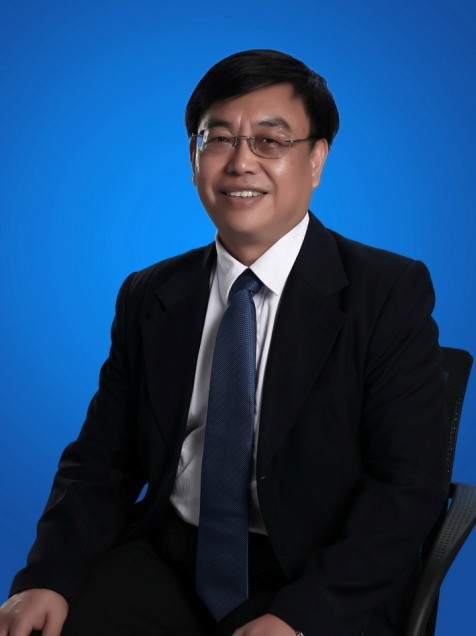
Professor Tao Zhang North China University of Technology,NCUT, China Speech Title: Intelligent Applications of Loan Risk Control Based on Financial Big Data Technology Abstract: Intelligent Technology Applications of Loan Risk Control Based on Financial Big Data are about how to prepare data warehouse, extract the features of data, draw the precise outline of potential customers who are going to borrow money, and build the models of risk control for borrowers so that lenders can decide can we lend our money to the customer, how much money to be landed to him, how much interest we can take from him before the loans can be granted. How do we control the risk during the loans of the customers, how to manage the risk after the loans. The speech will be talking about the algorithms applied onto the different phases of processes of loans, data ETL, data classification and cluster analysis, data modelling and analysis, deep learning and machine learning. It will be talked about the architectures of information technology for the workable intelligent loan system implementation, business processes of the loans, strategy of the loans, scoring of borrower behavior, scoring of borrower credits, knowledge base, and decision & inference engine. The contents can be used to design a real system of loans. |  |
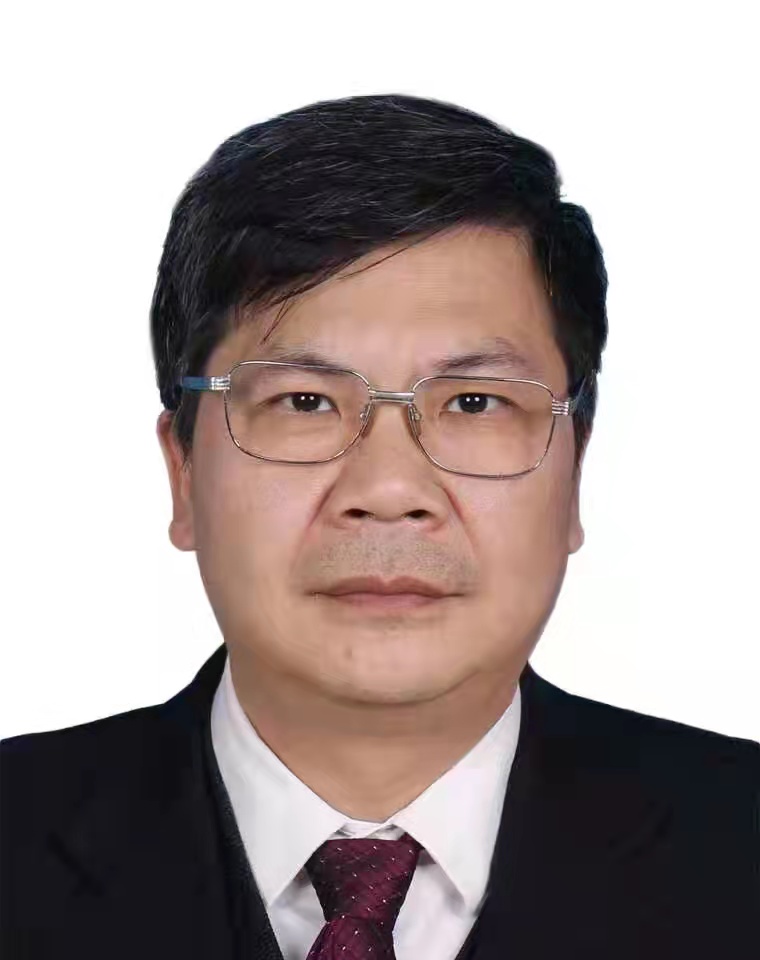
 | Professor Jeng-Shyang Pan Shandong University of Science and Technology, China Speech Title: Overview of Swarm Intelligence Algorithm Abstract: Swarm intelligence (SI) is based on collective behavior of self-organized systems. Typical swarm intelligence schemes include particle swarm optimization (PSO), ant colony system (ACS), stochastic diffusion search (SDS), bacteria foraging (BF), the artificial bees colony (ABC), swarm robotics, etc. Besides the applications to conventional optimization problems, SI can be used in controlling robots and unmanned vehicles, predicting social behaviors, enhancing the telecommunication and computer networks, etc. Indeed, the use of swarm optimization can be applied to a variety of fields in engineering and social sciences. This talk reviews some popular algorithms in the field of swarm intelligence for problems of optimization. The detail overview and experiments of Particle and Cat Swarm Optimization, Ant Colony System (ACS), Fish Migration Optimization (FMO), QUasi-Affine TRansformation Evolutionary (QUATRE) and are given. |
Professor Yuanchang Zhong Chongqing University, China Speech Title: An Vehicle-mounted Tank Valve Monitoring System Based on BeiDou Navigation Satellite Tracking Abstract: Based on the in-depth study of existing monitoring control technologies and communication theories, and combined with the logistics vehicles’ specific application environment in field of hazardous chemicals logistics regulation, this paper explores the new theories and methods that used in remote monitoring of non-solid hazardous chemicals logistics vehicles. Furthermore, the paper presents a multifunction remote network monitoring program of hazardous chemicals logistics vehicles. The vehicle tracking and valve control are integrated together creatively. This paper proposes a network monitoring and control platform which is composed of one control center and a number of vehicle-mounted terminals. The effectiveness of our work can realize the real-time scheduling, tracking and tank valve control of hazardous chemicals logistics vehicles with large tank. The research in this paper is expected to change the status of non-solid hazardous chemicals logistics vehicles monitoring, and improve the real-time, accuracy and reliability of the vehicle monitoring. This research provides a scientific guidance for condition monitoring, fault diagnosis and engineering design in field of hazardous chemicals logistics vehicles regulation. |  |
 | Professor Mingfu Zhao Chongqing University of Technology, China Speech Title: Intelligent optical fiber sensing technology and application Abstract: Intelligent sensing technology (IST) is based on the perception and fusion of multi-source information and provides codes of conduct for artificial intelligence (AI), which is an important direction for the development of a new generation of AI. The IST is one of the important components to response the comprehensive strength of a country and is highly valued by countries all over the world. Currently, optical fiber sensing technology has become one of the most important development directions of the IST.To illustrate the impact of the IST on AI, carry out forward-looking research and engineering applications in the "AI field", and to promote an innovation-driven development strategy based on the "big data and intelligence", the report consists of four parts as follows: (1) The relationship between intelligent optical fiber sensing technology and AI, (2) Basic research progress, (3) Interested research directions, (4) Representative results. Furthermore, the report will review our team's progress in basic research, introduce future research directions, and show the the representative results that our team has previously achieved. |
| Invited Speakers |
Professor Wei William LEE Zhejiang University of Technology, China Speech Title: Application of Blockchain in Financial Services Abstract: At present, the domestic financial service industry includes four categories: banking, securities, trust and insurance. It is a highly centralized industry, and its credit is mainly guaranteed by the authority of banks, insurance companies and trust institutions. In such a centralized mode, the transaction parties in the industrial chain can not do point-to-point docking, and the transmission of information and credit needs to be completed through layers of intermediary, which leads to low business efficiency and increases the intermediate cost. Therefore, improving the efficiency of information and trust flow from the technical aspect can play a considerable role in promoting the de-velopment of financial services. In recent years, the application of blockchain in financial services industry is increasing, including cross-bank cross-border payment, supply chain finance, asset digitization and so on. This paper analyzes the realization mechanism of blockchain tamper proof, open and transparent, decentralized and intelligent contract features from the technical perspec-tive, and studies and analyzes several excellent applications in financial services industry, such as digital currency, public welfare fund-raising, accounts receivable and credit ref-erence, so as to explore the advantages and significance of blockchain application in the financial services industry. Finally, it gives some suggestions on how to apply block-chain in financial industry. The open and transparent nature of blockchain data provides new ideas for the prob-lems that traditional technology can not solve. For the problem of application landing difficulties, the following ideas can be considered: to improve the traditional financial application, in the initial stage of application, the blockchain system and the traditional system run in parallel to verify the feasibility of the blockchain system; The application of blockchain starts from small non critical applications, such as data storage and data sharing. At the same time, combined with the above dual system parallel, it further en-sures the security and reliability of the system; Try some excellent new applications that can only be realized with blockchain, such as automatic public welfare allocation of blockchain. As they are brand new applications, there is no change between the old and new systems, so they are easier to implement .Combined with the decentralized, tamper proof, open and transparent nature of blockchain, these problems can be solved through blockchain. |  |
 | Dr. Zhixiang Liu Shenzhen Association of IC Industry Speech Title: Overview of IC Industry |
Professor Nianbing Zhong Chongqing University of Technology, China Speech Title: Intelligent fiber optic sensing technologies for monitoring biofilm growth Abstract: Biofilm thickness is an important factor affecting biofilm activity, microbial metabolic pathway and biochemical transformation efficiency. On-line non-destructive intelligent sensing of biofilm growth and metabolism information is extremely important for optimizing and controlling biofilm thickness and effectively regulating microbial growth and metabolism processes.On-line non-destructive monitoring of biofilm growth and its biochemical transformation process is a worldwide problem. The research group of "Biochemical Information Intelligent Optical Fiber Sensing Technology and Application" led by the reporter has been engaged in the research of biofilm thickness, biofilm activity and metabolic characteristics for more than 10 years. This report describes the application of intelligent fiber sensing technology in the field of biochemical transformation from three aspects: (1) Intelligent fiber sensing of biomass and its metabolic heat generation, (2) Intelligent fiber sensing of biofilm thickness and metabolic hydrogen generation, and (3) Intelligent fiber sensing of biofilm thickness and metabolic phenol. Furthermore, the perspectives of intelligent optical fiber technology and 3D imaging technology in biofilm identification are also introduced. |  |